Anti-Fraud Technology
Custom protection against fraudulent traffic in Google Ads
Reduce ad fraud, defend against attacks from your competitors, and protect your investment in Google Ads

Results
Reduction in invalid interactions in Search, Display, Performance Max, Video and Demand Gen campaigns
80%
Invalid-interaction rate stabilized in Search
<10%
First results visible in the Google Ads dashboards
3 weeks

Anti-Fraud Technology
Detects, filters and documents fraudulent traffic in your Google Ads campaigns
At Fáktica we've developed anti-fraud technology that detects and filters fraudulent traffic in Google Ads campaigns —Search, Display, PMax, Video and Demand Gen— with accuracy that far exceeds that of the commercial solutions on the market. The advertising ecosystem is increasingly vulnerable: bad bots now outnumber legitimate ones, and on top of them come malicious manual clicks from competitors, click farms and impression storms —bursts of bot-driven impressions— aimed at your most valuable keywords.
In campaigns managed with Anti-Fraud Technology, invalid-interaction rates stabilize below 10% in Search and 15% in Display and PMax. Results start showing within the first three weeks, and the impact on sales and profitability is fully realized after two or three months of continuous use.

Quantifiable fraud reduction
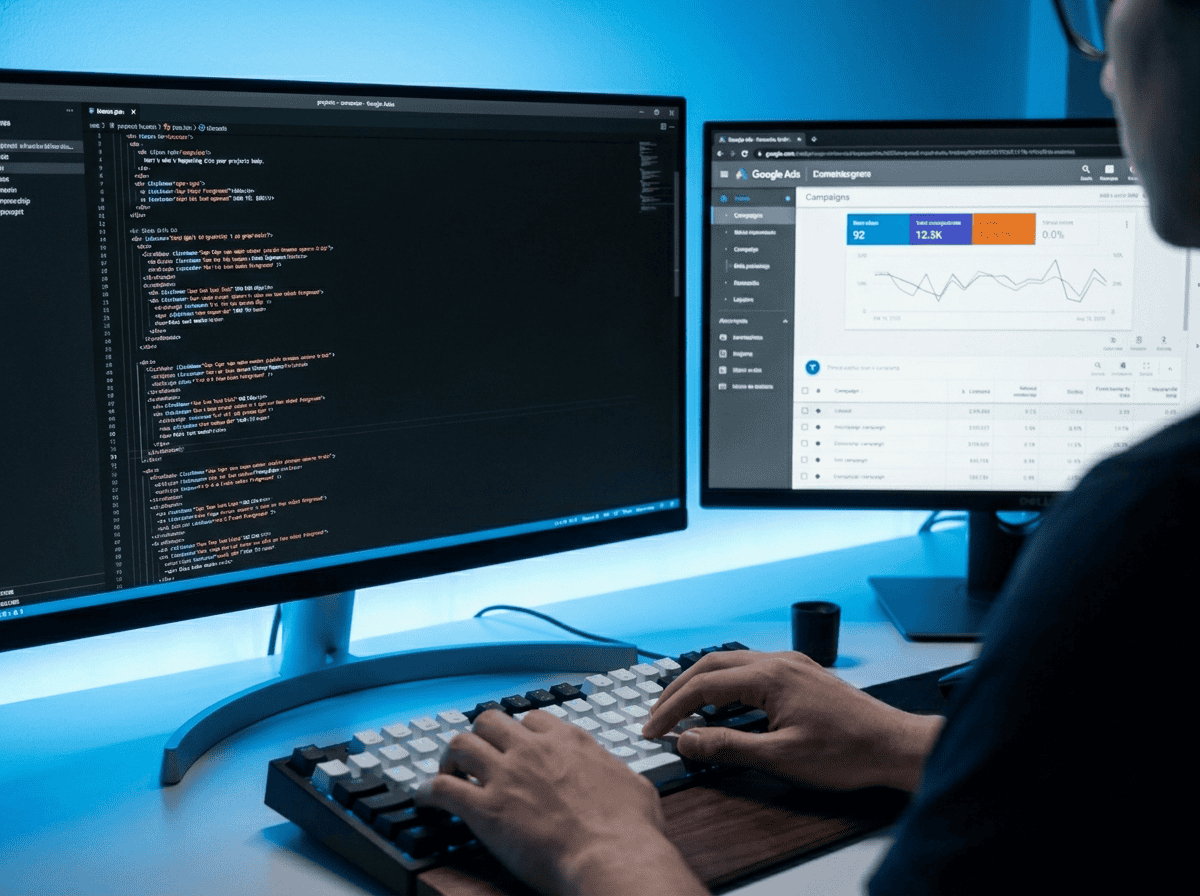
The results are clearly visible in the Google Ads dashboards.

Audit of the losses incurred
We rigorously quantify the financial impact of historical fraud.

Filing official claims
We prepare the reports and evidence required to submit a claim through Google’s official channels.
One system, two levels of protection

Antibot module
This is the base layer, and it operates in Display, PMax, Video and Demand Gen, where placement fraud is most prevalent and the damage most systematic. It identifies and excludes the environments where fraud concentrates —placements, geographic micro-zones, audiences— using machine learning algorithms that analyze hundreds of combined signals and continuously self-train. It works autonomously, in real time, without touching your campaign structure.
Protection against generic attacks · always included

Premium service
Designed for high-CPC accounts facing targeted attacks by competitors on search campaigns: malicious clicks and impression storms aimed at draining your budget and sinking your Quality Score, your Ad Quality and the average position your ads actually hold. We design a custom architecture that cross-references Google Ads data with server logs and your CRM to achieve real-time protection, quantify the financial impact of historical fraud, and obtain the forensic evidence needed to escalate your claim to Google.
Protection against targeted attacks · for high-spend Search accounts

How does it work?
How does it work?
Our technology starts from a simple premise: it's not about blocking everything, but about blocking what really matters. Fraud isn't distributed randomly; it is concentrated in specific environments —particular placements within the Display network, geographic micro-zones, device and behavior patterns— that can be identified, excluded and monitored systematically.
Unlike tools that rely on IP blocking —ineffective against dynamic IPs and CG-NAT—, our model relies on machine learning algorithms that analyze hundreds of combined signals and continuously self-train, adapting to new fraud patterns as they appear.
And when the attack is targeted, we take a different approach: in the Premium service we build a custom architecture that cross-references Google Ads, server logs and CRM to protect you in real time from the malicious clicks and impression storms aimed at damaging your Quality Score and your Ad Quality, driving up the cost of every auction and worsening the average position your ads actually hold.
Fáktica's Anti-Fraud vs. commercial solutions
Relying solely on Google's built-in protections or on generic fraud-detection tools creates a false sense of security. None of these approaches works at the level of forensic architecture.
The real problem
The digital advertising ecosystem is increasingly vulnerable to different types of fraud that drain your budget and contaminate your data.

Bad bots
Only half the traffic on the web is human. The other half is generated by bots. And among those, malicious bots already outnumber legitimate ones, and their activity grows every year.

Malicious manual clicks
Competitors who try to drain your budget by deliberately clicking on your ads.

Click farms
Networks of sites and rotating IPs that generate artificial revenue at the expense of your investment.

Impression storms
Botnets that generate thousands of impressions without clicks for your keywords to sink your CTR and, with it, your Quality Score.

The invisible damage
Fraud doesn't just drain your budget. It poisons your data. And that's far more expensive
Most advertisers see fraud as a wasted-budget problem. But there's a much quieter, more damaging consequence that few take into account.

Fake conversions
Your Google Ads dashboard fills with conversions that never reach your CRM… because they aren't real.
Smart Bidding learns from contaminated data
Google's algorithms optimize using your conversion history and user behavior. If that history includes millions of fraudulent interactions, Smart Bidding learns the wrong patterns and bids on false signals.
Your scaling decisions are wrong
CPA, ROAS, conversion rate, cost per lead: all these metrics get distorted if a significant share of the traffic isn't human. You're making high-stakes investment decisions with data that doesn't reflect reality.
You don't just lose money to click fraud
You lose business opportunities. Customers who never discover you. Sales you never make.
How much fraud is there really in your campaigns?
Find out with a free diagnostic, delivered in two to three weeks.
90.8%
In one account we audited, with annual ad spend of more than US$3 million, 76% of the incoming traffic in Search campaigns was fraudulent. In 30 days we brought that rate down to 7%, a 90.8% reduction in total invalid-click volume.
In Search campaigns with high invalid-click rates, two out of every three clicks that Google considers legitimate —and therefore billable— can be fraudulent. It isn't that Google is deceiving you: it has no access to your server and cannot see the traffic reaching you through other channels, so its decisions are based on incomplete data.
«For years, advertisers have accepted ad fraud as an inevitable cost. We prove the opposite: with our Anti-Fraud technology you not only get a return on the investment you were losing to fake traffic — you can also measure the damage and claim it back. That's the difference between truly protecting your account and simply resigning yourself to paying for clicks that were never customers.»
Jonatan Castaño
Who is Anti-Fraud Technology for?
This system is especially suited to you if any of the following applies to you:

Implementation
Fast and non-invasive, with no disruption to your campaigns
The system operates as an intelligence layer over your existing campaigns. It doesn't require redesigning the structure or pausing any active campaign.
Diagnostic audit
We analyze the real level of fraud in your account by cross-referencing platform data with behavioral signals, and we identify the placements, micro-zones, devices and audiences with the highest fraud concentration. In the Premium service we also analyze and financially quantify historical fraud from your server logs.
Activation and protection
Fáktica's proprietary scripts are installed. The system starts monitoring traffic and applying exclusions in real time. Manual bids and campaign structures are left untouched.
Self-training and stabilization
The system learns the specific patterns of your account and your sector; the invalid-interaction rate gradually decreases until it stabilizes below 10%.
Continuous and forensic operation
The system operates autonomously. You receive periodic reporting on valid traffic, real CPC, conversion quality and excluded placements and — where applicable — the forensic documentation to file a claim.

TEAM
Specialists in digital marketing, analytics and advertising technology development.
Every account has a direct manager and access to the technical team from the start of the project.
FOUNDING PARTNER · CEO
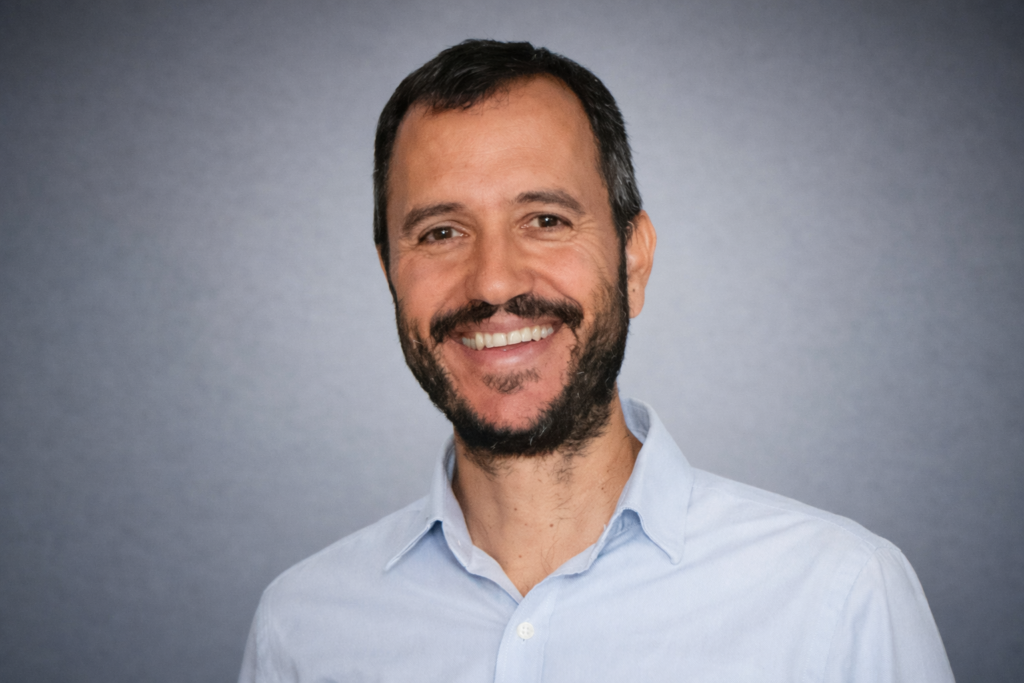
Marcos Ferreiro
Aeronautical Engineer (UPM) and Master in Public Administration (Harvard University). He began his career in the aerospace sector, modeling fluid dynamics systems. He teaches impact evaluation at IE Business School.

CO-FOUNDING PARTNER & BOARD MEMBER
Pablo Marco
Mining Engineer and Master in Public Management (Harvard University). He worked as a consultant at McKinsey and in 2005 founded Iguana Sell, a pioneering e-commerce company in Spain. He is an associate vice dean at IE University – School of Politics, Economics & Global Affairs.

DATA ANALYST
Aliona Blidari
Our guardian angel for analytics. Aliona studied Mathematics and Business Administration at the Trade Co-operative University of Moldova before moving to Spain. Her passion for mathematics, traveling, and learning new things has remained intact, and it led her to Fáktica in 2024.

SOCIAL MEDIA, CRM & CONTENT
Álvaro Rebollo
Telecommunications Engineer (Polytechnic University of Madrid), he has spent two decades in digital marketing, streaming and CRM — first at BMG and Sony Music, and later leading his own project, Los Amigos Digitales. He has collaborated with Fáktica since 2022 on social media campaigns and content development.
PPC, ANALYTICS & CONTENT
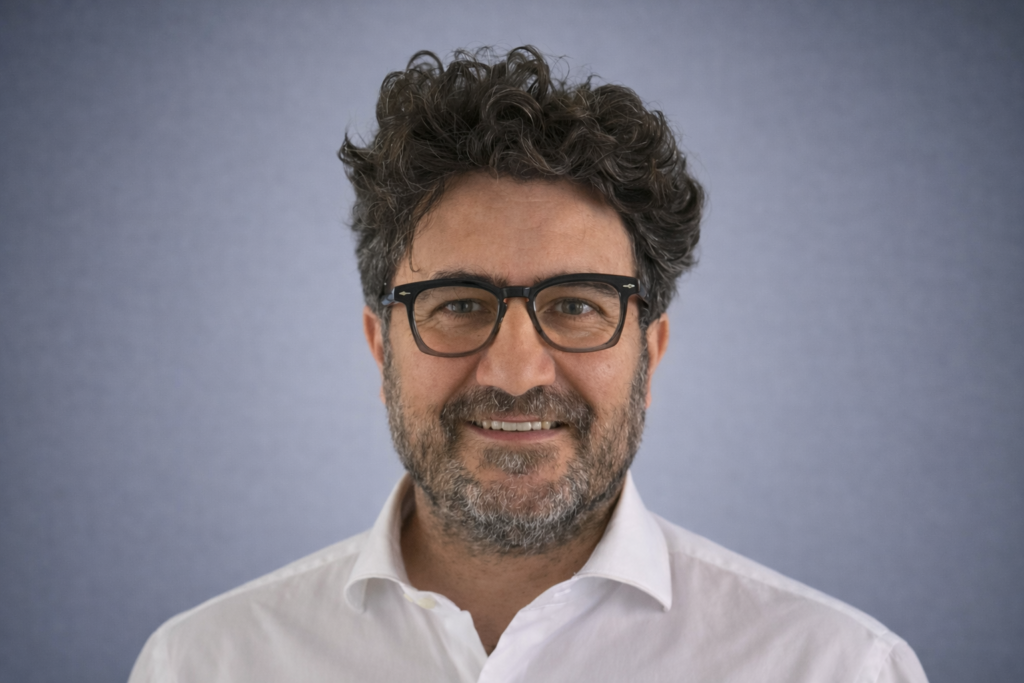
Javier Pérez
Aeronautical Engineer (Polytechnic University of Madrid), he worked for 15 years at Airbus Defence & Space before moving to St. Louis (USA), where he currently lives. A chess master and expert in statistics and data science, he has collaborated with Fáktica since 2019 on algorithm development, data analytics, PPC campaign management and technical content development.

TECHNOLOGY DIRECTOR
Jonatan Castaño
Aeronautical Engineer (Polytechnic University of Madrid) and graduate in Social and Cultural Anthropology (UNED). He worked in data analysis at EADS and Airbus, and from there moved into optimizing digital marketing campaigns.

PRODUCT DEVELOPMENT DIRECTOR
José Gómez
Degree in Economics and Business (UCM) with a postgraduate degree from the Hanken School of Economics (Helsinki). An expert in Mobile Marketing and Mobile Value-Added Services, he has worked with telcos and entertainment and consumer brands across LATAM and EMEA. Passionate about digital marketing and UX optimization.

GRAPHIC DESIGNER
Lisle Ordóñez
A graphic designer and audiovisual director, winner of international awards for best art direction at the Dark Comedy Film Festival in Los Angeles (2023) and the ACTRUM Film Festival (2021), Lisle has collaborated with Fáktica Analytics since 2021. She has designed advertising campaigns and graphic pieces for Microsoft, Kodak, the European Union and STIB Belgium. Her artistic work can be seen here.

SENIOR SOFTWARE DEVELOPER
Oleksandr Chernenko
A senior .NET developer and TensorFlow-certified, Oleksandr holds a master's in Computer Science from the V.I. Vernadsky Taurida National University (Ukraine). He is an expert in web application development and a lover of the beaches of Asturias, where he surfs whenever he can. He has collaborated with Fáktica since 2022.

DATA ANALYST
Vazgen Movsesyan
Graduate in Accounting and Finance (University of Oviedo), he began his career in auditing and business advisory, later joining the Fáktica team as a Junior Analyst, where he combines analysis with overseeing the company's finances.

DATA ANALYST
Ana María Ramírez
Holder of a Master's in Financial Advisory and Planning (Rey Juan Carlos University), she began her career in financial advisory, later joining the Fáktica team as a Junior Analyst.

our clients
Companies that trust us








PROJECTS
Real-world applications of our methodology and technology across different projects.
The main goal of our campaigns: to increase our clients' profits in a measurable way.

REVIEWS
What do our clients say?







FAQs
Frequently asked questions
Do you suspect you're paying for fraudulent traffic?
We analyze your Google Ads account and tell you whether you're a victim of fraud, how much it's costing you, and what can be recovered.
Confidential diagnosis.
We reply within 24 hours.